Software Testing with Generative AI
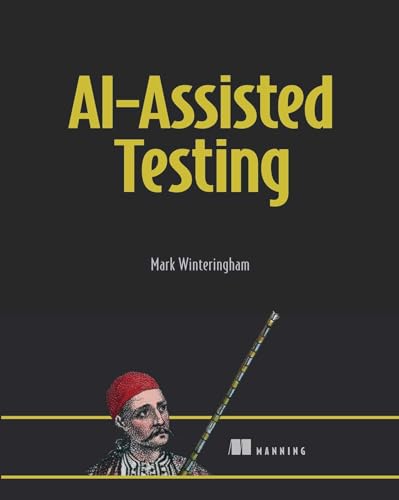
Practical guide to using generative AI for test design, synthetic data generation, and automation without the hype.
Core Message
AI amplifies what skilled testers can accomplish, but never replaces the critical thinking they bring. Success lies in knowing when to deploy these tools and how to provide them with proper context.
Key Insights
- AI Augments, Never Replaces - LLMs expand testing coverage and reduce repetitive work, but human judgment remains essential. The tester decides what to test and why; AI handles the tedious execution.
- Context Determines Quality - AI output improves dramatically when you provide domain-specific information. Techniques like retrieval-augmented generation (RAG) and fine-tuning "bake context in" for more relevant results.
- Prompt Engineering Is a Core Skill - Crafting structured, clear prompts yields reliable output. Vague requests produce vague answers; specific requests produce actionable suggestions.
- Synthetic Data Generation Solves Real Problems - AI excels at generating diverse test data quickly—privacy-safe alternatives to production data, edge cases, and varied formats that would take hours to create manually.
- Hallucinations Are Inevitable - LLMs sometimes produce plausible nonsense. Treat AI output as a draft requiring verification, not a final answer. Data provenance and accuracy checks remain your responsibility.
- Exploratory Testing Gets a Partner, Not a Replacement - AI can generate test ideas, suggest scenarios you might miss, and convert rough notes into structured reports. The creative exploration still belongs to humans.
- Coding Assistants Accelerate Automation - Tools like GitHub Copilot speed up writing test scripts while you maintain control over strategy. They're particularly useful for boilerplate and repetitive patterns.
- Token Limits Shape Your Workflow - Understanding context window constraints helps you design prompts that work within technical boundaries. Large documents may need chunking; complex tasks may need breaking down.
- AI Agents Can Handle Routine Tasks - Building agents that assist with specific workflows—data transformation, report generation, test case suggestions—multiplies your effectiveness across projects.
- Adoption Requires Clear Problems - If you cannot identify specific challenges AI would solve, it may not be the right time to adopt it. Success comes from targeted application, not technology for its own sake.
Notable Quotes
"Value with Generative AI is rooted in three principles: mindset, context, and technique. Mindset is very important and that's rooted in the mindset of what the value of testing is and how we do testing."
"We need to bake context... that's looking at that as a principle. But also tools like retrieval augmented generation and fine tuning because those are the tools that can help you with baking the context in."
"Being able to identify when you're in a situation where you're doing something that's algorithmic - clear steps can be explicitly described - versus the heuristic stuff, where it's sort of more creative, more freewheeling."
Who Should Read This
This book suits developers, testers, and QA engineers who want practical guidance on integrating AI into their workflows. Junior to intermediate practitioners unfamiliar with LLMs and prompt engineering will gain the most, though experienced testers will find value in the concrete applications and critical perspective on limitations.
No prior AI knowledge required—concepts build from the ground up. Basic software development or testing experience helps you extract maximum value. Those already well-versed in generative AI may find some foundational sections familiar, but the testing-specific applications remain valuable regardless of AI background.
Core Ideas
Mark Winteringham cuts through the AI hype to show where generative AI actually helps testers. The book focuses on three practical applications: generating synthetic test data, augmenting test design, and supporting automation efforts.
Key Takeaways
- AI works best as a collaborator, not a replacement for testing expertise
- Synthetic data generation solves real problems around privacy and edge cases
- Prompt engineering matters: better prompts yield better test suggestions
- AI can accelerate exploratory testing by suggesting scenarios humans might miss
Connections
Related to the-way-to-deliver-fast-with-ai-quality on integrating AI into development workflows.