How to Take Smart Notes: One Simple Technique to Boost Writing, Learning and Thinking
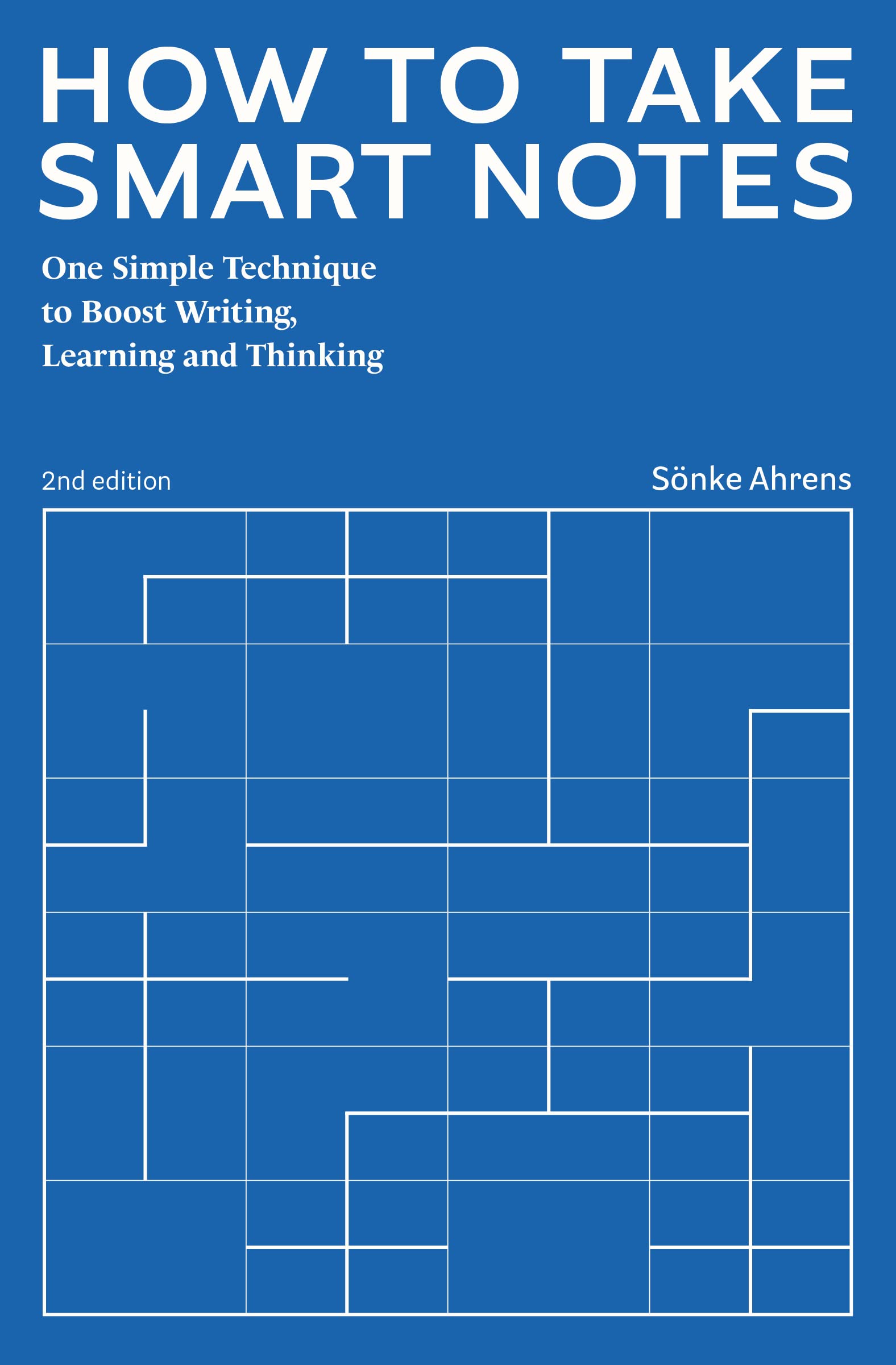
A guide to the Zettelkasten (slip-box) method for capturing, connecting, and synthesizing ideas into quality writing and deeper understanding.
The book presents the Zettelkasten method, inspired by sociologist Niklas Luhmann who used a system of 90,000+ interconnected index cards to produce over 70 books and 400 articles.
Core Idea
Writing is thinking made visible. By externalizing ideas through structured notes, you deepen understanding and create a system that generates new insights through unexpected connections.
The Three Note Types
- Fleeting notes — Quick captures of ideas in the moment
- Literature notes — Brief summaries with source references
- Permanent notes — Distilled thoughts in your own words, written to be understood without context
Key Principles
- Bottom-up organization — Let structure emerge from connections, not imposed hierarchies
- One idea per note — Atomic notes are more versatile and linkable
- Write for your future self — Each note should stand alone and remain meaningful
- Follow your interest — Work on what engages you rather than forcing a linear path
Why It Works
The method leverages how memory and creativity actually function — through association rather than categorization. By creating dense links between ideas, you build a "second brain" that surfaces relevant connections when you need them.
Related
This book is the foundational text for the Zettelkasten method discussed in building-a-second-brain-and-zettelkasten, which compares it with Tiago Forte's BASB system. The principles align closely with evergreen-notes, which emphasizes atomic, concept-oriented notes that accumulate insight over time.